

Table of contents
What does sustainable travel mean?
When you travel sustainably, you’re thinking ahead and acting consciously. You’re striving to minimise your environmental impact while supporting local communities. Your goal is to leave positive footprints – socially, economically, and ecologically – through gentle tourism. This way, you’re helping ensure that future generations can enjoy the beauty of our planet too.
Why is sustainable travel important?
We all love exploring the world. If you want to be able to marvel at colourful coral reefs and lush forests tomorrow, you need to take action today. Don’t worry, you don’t have to give up your adventures! It’s about approaching things a bit differently and considering the future in your plans.
Tips for sustainable travel
Trip duration and destinations

Escaping the grey British winter usually means flying, which causes a lot of CO2 emissions. If you’re drawn to far-flung destinations, stay longer. A long-haul trip for a week is much less relaxing than if you stay for 3 weeks. During the pandemic, we also rediscovered how beautiful our own country and neighbouring countries are. These are easily accessible by train, ferry or bus – ideal for short breaks or weekend trips.
Travelling by public transport
Switch to train, ferry and bus for trips to nearby countries. Once at your destination, use public transport as much as possible. Often, local tourist boards offer guest cards that include free or discounted use of public transport, for example in Austria. Leave the car behind and save money on car hire.
Sustainable eating on holiday
When choosing food, look for information about seasonality and origin. Locally produced seasonal food can be a good way to discover the cuisine of your destination and support local producers.
You can greatly reduce your ecological footprint by consuming fewer meat and dairy products. Many countries have sophisticated meatless dishes that are unknown to us. When choosing accommodation, check whether its restaurants offer vegetarian, vegan and locally sourced options.Find out more about plant-based nutrition.
Supporting local people and economies

Local communities are increasingly resisting the negative effects of mass tourism/overtourism, feeling they don’t benefit from the income and are being pushed out of their living spaces. Here’s how you can give back to the local community:
- Even if you’re in a comfortable all-inclusive resort and are told “there’s nothing out there/it’s dangerous”, leave the hotel grounds and visit a local market, have a coffee in town, support women’s cooperatives or local animal shelters.
- Many locals create beautiful and useful things from local materials that will bring joy as souvenirs back home. Make sure no endangered animal or plant species were used (which can also cause problems with customs).
- Consider eating at family-run restaurants and buying from local businesses. This allows more of your holiday spending to go directly to businesses at your destination.
- Simply giving money, pens or sweets to local children harms them because they’re more likely to beg than go to school and see visitors as mere sources of money. Instead, turn to organisations that support local initiatives, e.g. the TUI Care Foundation.
Tip: Is the sole of your hiking boots coming off? Is the seam of your favourite shirt coming undone? Abroad, it’s often cheaper to have things repaired, and they’ll fix things that a British cobbler or tailor would say “isn’t worth it anymore”. This is sustainable, supports the local economy and you can continue to use your favourite item.
What to look for when choosing accommodation
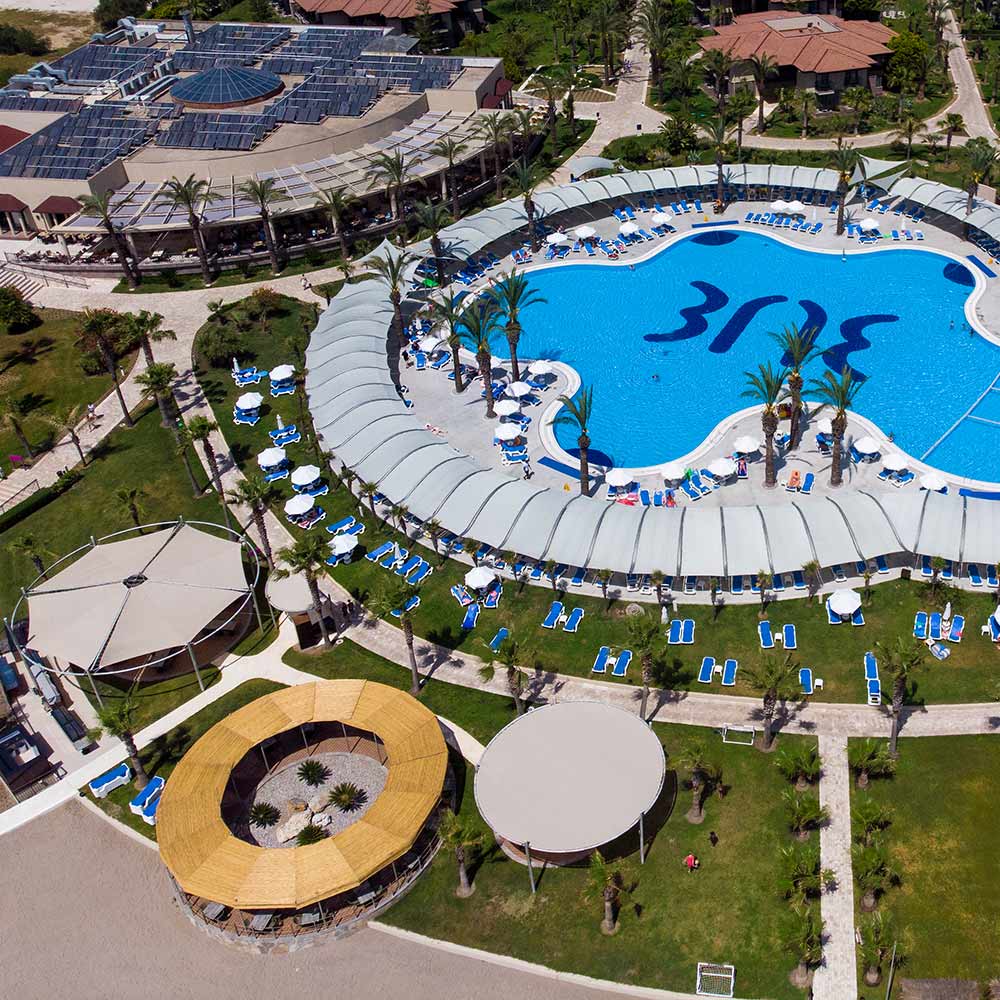
Choose environmentally friendly accommodation. Yes, even an all-inclusive hotel can promote sustainability in tourism! Look for resource-efficient management: in-house power generation or use of green electricity, water-saving measures and treatment, waste separation and reusable products instead of single-use plastic – all these are good signs of sustainable commitment. Widely recognised awards and seals offer guidance. On the individual TUI BLUE hotel pages, you can find information about measures implemented at the respective property. These vary by hotel and location. How to recognize a sustainable hotel.
Using local resources sparingly and respecting nature
- Choose nature-friendly activities: Go hiking instead of quad biking, explore the area by bike instead of a jeep safari. Flora and fauna will thank you and you’ll be closer to nature.
- Be sparing with water and air conditioning. Many countries suffer from drought and locals have to ration. Act as if you were at home – don’t have towels and bedding changed daily.
- Elephant washing instead of elephant riding: Protect animals by not supporting activities that exploit them.
- Don’t throw anything away carelessly! Even if in many countries rubbish is simply dumped on the street or in nature, do better and dispose of your rubbish in the designated places. Be a role model for others.
- Take your drinking bottle, thermos mug and cloth bag from home. This saves disposable packaging and plastic bags while travelling. Here you can find beautiful thermos mugs and drinking bottles from TUI BLUE.

TUI BLUE hotels implement a range of environmental and social measures, dependig on the property and the location. Details can be found on the respective hotel page Learn more about the topic on our website.
Getting in touch with the local population
Walk through the world with open eyes and ask questions. On a trip through Morocco, we noticed how dry the date palms in the oases were. We asked locals if this was normal. They told us it hadn’t rained for almost 10 years and that palm oases could usually cope well with a few years of drought, but not this extreme. As a result, agriculture there has to be abandoned and people are moving to cities or abroad.
Another example: On the Cape Verdean island of Fogo, it’s extremely dry in the interior. Water for the inhabitants has to be brought in by tanker trucks. In our accommodation, it took at least 2 minutes for warm (sun-heated) water to come out of the shower. The cold water flowing in the meantime was collected in a bucket and used for watering or flushing the toilet. Simply ingenious!
At the same time, huge plantations all over the world tap into groundwater so that we Europeans can have fresh tomatoes (which don’t even taste particularly good) outside the season. Seeing with your own eyes how climate change and reckless economic practices negatively impact holiday destinations is quite different from seeing floods and forest fires on television. You’ll take this knowledge home with you and rethink your consumer behaviour towards sustainable action, keyword “regional and seasonal”.
If you want to get involved in local nature conservation while you’re there: Local organisations often offer activities such as beach clean-ups that you can participate in.

It doesn’t make any difference at all if I behave in an environmentally friendly way when travelling. What can I as an individual achieve?
When we realise that every change multiplied by millions of people can make a difference, sustainability becomes tangible. If 67 million people in the UK forego a plastic straw once, we’ve saved 67 million plastic straws in one go.
Statistics show that meat consumption in the UK has decreased. And that’s not just because more people have become vegetarians or vegans, but because meat-eaters have also reduced their meat consumption. With such a large mass of people, it does make a difference whether you eat meat once or five times a week. And you can do this as a tourist too without diminishing your holiday enjoyment!
The same applies when travelling: Be the change you want to see in the world!